Achieving tight tolerances in continuous linear plastic shapes requires precise synchronization between raw material properties, thermal dynamics, and mechanical tooling. When operators attempt to push complex geometries through standard tubing equipment, the results are highly predictable. Production bottlenecks, high scrap rates, and dimensional inconsistencies typically stem from a fundamental mismatch between the chosen extrusion equipment, the initial die design, and the specific profile requirements. Solving these operational challenges begins with analyzing the mechanical and thermal variables at play on the factory floor. A deep technical understanding of the profile extrusion process serves as the foundational requirement for evaluating equipment upgrades, configuring a new production layout, or vetting a reliable machinery partner. By mastering the thermodynamic transition of polymers, manufacturers can eliminate warping, control die swell, and consistently yield high-quality continuous shapes.
Key Takeaways
- Process Synchronization: The profile extrusion process relies on a continuous, closed-loop system where design, feeding, melting, filtering, shaping, and cooling must be precisely calibrated to prevent material degradation and dimensional warping.
- Equipment Specificity: Standard tubing extruders are insufficient for complex geometries; specialized tooling and downstream equipment are mandatory for non-tubular, continuous shapes.
- Material-Machine Alignment: The choice between single-screw and twin-screw extruders is dictated by the polymer used (e.g., rigid PVC requires different shear rates than flexible elastomers).
- Risk Mitigation: Upfront investment in custom die design, flow simulation, and vacuum calibration significantly reduces long-term costs associated with die swell and post-extrusion shrinkage.
Anatomy of the Profile Extrusion Process
Pre-Production Design and Tooling Engineering
The extrusion process begins long before raw polymer enters the hopper. Successful manufacturing relies heavily on upfront CAD modeling and advanced polymer flow simulation to engineer the custom die. Tooling engineers must account for the specific rheological properties of the chosen thermoplastic. Because polymer melts exhibit non-Newtonian fluid behaviors, forcing them through complex cross-sections creates uneven shear rates. Toolmakers typically use wire EDM (Electrical Discharge Machining) and precision CNC milling to cut these complex profiles into blocks of 4140 tool steel or 420 stainless steel.
Upfront design dictates the success of the physical extrusion. Engineers utilize flow simulation software to predict how the melt will behave under pressure, ensuring uniform wall thickness and balanced flow velocities across the entire profile. If a profile features both thick and thin sections, the molten plastic naturally flows faster through the thicker channels. Without internal flow restrictors or carefully machined land lengths within the die, the resulting profile will warp, twist, or tear as it exits the tooling. The land length—the final straight section of the die channel—acts as a flow resistor, and engineers adjust this length to balance the exit velocity of the polymer.
Material Preparation and Feeding
Consistent output requires consistent input. Gravimetric and volumetric feeding systems introduce raw thermoplastic pellets, powders, and necessary additives into the extruder hopper. Volumetric feeders deliver material based on volume and auger speed, which works for basic setups but fails to account for bulk density changes. Gravimetric feeders weigh the material in real-time using load cells, adjusting the feed rate to compensate for density variations. For high-precision applications, gravimetric feeding prevents surging and maintains a uniform melt pressure at the die face.
Moisture control and pre-drying play a massive role in material preparation, particularly for hygroscopic materials like Polycarbonate, Nylon, or ABS. These polymers absorb ambient moisture directly into their molecular structure. If processed without adequate drying, the trapped moisture vaporizes inside the heated extruder barrel. This expanding steam causes surface defects, internal voids, and a severe loss of mechanical strength in the finished profile. Desiccant dryers must reduce moisture content to specific parts-per-million thresholds, often requiring a -40°C dew point, before the resin enters the feed throat.
Melting, Mixing, and Filtration in the Extruder Barrel
Once inside the extruder barrel, the raw polymer undergoes a thermodynamic transition. The system utilizes both mechanical shear and thermal heating mechanisms to convert solid polymers into a homogenous melt. While external cast-aluminum heater bands provide initial thermal energy, the majority of the heat required to melt the plastic generates from internal friction. As the rotating screw shears the polymer against the stationary barrel wall, mechanical energy converts into heat.
The extrusion screw features three distinct zones, each impacting melt pressure and temperature consistency. The feed zone conveys solid pellets forward from the hopper. The transition or compression zone gradually decreases in flight depth, compressing the polymer, forcing out trapped air, and driving the melting process through high shear. Finally, the metering zone pumps the fully molten, homogenous polymer at a consistent pressure and volume toward the die. Extruders are often classified by their Length-to-Diameter (L/D) ratio, with 24:1 to 32:1 being common for profile applications.
Before the polymer enters the die, it passes through screen packs and breaker plates. These components filter out unmelted resin, degraded material, and foreign contaminants. A typical screen pack might consist of a 20-mesh, 40-mesh, and 80-mesh screen layered together. Beyond filtration, the breaker plate converts the rotational flow of the polymer melt into a linear flow, while simultaneously building the necessary backpressure required for proper mixing and consistent die feeding.
Die Design and Shaping
The die serves as the heart of any plastic profile extrusion line. Here, the molten plastic is forced under high pressure through a custom-machined steel die to form the continuous cross-sectional shape. Unlike standard pipe dies, profile dies feature complex geometries that must carefully balance fluid dynamics. The internal flow channels must be polished to a mirror finish to prevent polymer stagnation and degradation.
Die design must account for flow velocity variations across thick and thin wall sections. Molten polymer naturally seeks the path of least resistance. To ensure the material exits the die face at a uniform velocity, toolmakers adjust the land length. Longer land lengths increase resistance, slowing down the flow in thicker sections to match the speed of the thinner sections. This precise balancing act prevents internal stress and subsequent warping during the cooling phase.
Cooling, Calibration, and Finishing
As the hot, pliable plastic exits the die, it immediately enters the cooling and calibration phase. Vacuum sizing and calibration tables hold the profile's exact shape while it enters the water cooling bath. The calibration tooling utilizes a vacuum pump system, typically pulling 15-20 inHg of vacuum, to pull the semi-molten outer skin of the profile against a precisely machined metal surface. Simultaneously, chilled water circulates through or sprays onto the tooling, freezing the polymer into its final dimensions.
Downstream puller mechanisms, often referred to as haul-offs, grip the cooled profile and pull it down the line. Maintaining consistent line tension is mandatory; any fluctuation in pulling speed alters the final dimensions of the product. Haul-offs use polyurethane cleats or rubber belts driven by servo motors to ensure exact speed control. The haul-off speed must perfectly synchronize with the extruder output. Following the puller, automated flying knife cutters or planetary saws cut the continuous profile to specified lengths, while swarf extraction systems remove the cutting dust.
Evaluating Equipment for a Plastic Profile Extrusion Line
Single-Screw vs. Twin-Screw Extruders
Selecting the correct extruder technology dictates the operational limits of the entire production line. Single-screw machines excel at processing standard thermoplastics like Polyethylene, Polypropylene, and ABS. They provide high-volume melting capacity, rely on straightforward mechanical principles, and offer lower initial capital investment. However, single-screw extruders depend heavily on friction for melting, which damages heat-sensitive polymers.
Twin-screw machines are strictly necessary for heat-sensitive materials, complex compounding tasks, and processing rigid PVC powder. These machines feature two intermeshing screws that provide positive displacement pumping. This mechanism relies less on friction and more on the precise geometry of the screws to convey and melt the material. Twin-screw extruders offer superior mixing capabilities, precise temperature control, and the ability to process heavily filled or abrasive compounds without excessive thermal degradation.
| Feature | Single-Screw Extruder | Twin-Screw Extruder |
| Primary Application | Standard thermoplastics (PE, PP, ABS, PC) | Heat-sensitive materials, Rigid PVC, Compounding |
| Melting Mechanism | High mechanical friction and shear against the barrel | Positive displacement and controlled intermeshing shear |
| Mixing Capability | Moderate (requires specialized Maddock mixers) | Excellent (highly distributive and dispersive) |
| Material Feed | Relies on friction; struggles with powders | Positive feed; easily handles dry blends and powders |
| Energy Consumption | Generally lower per kg of standard resin | Higher, but necessary for specific polymer rheology |
Configuring a PVC Profile Extrusion Machine
Processing Polyvinyl Chloride requires highly specialized equipment configurations. A standard PVC profile extrusion machine must handle the unique thermal instability of the material. When exposed to excessive heat or prolonged residence times, PVC degrades rapidly, releasing corrosive hydrochloric acid gas. Manufacturers typically use conical or parallel twin-screw extruders for this application.
To combat the corrosive nature of the polymer, the extruder barrel and screws require specialized bimetallic linings, often utilizing tungsten carbide alloys. The screw geometries must feature low-shear designs to prevent localized overheating. Furthermore, rigid PVC formulations often release volatile gases during the melting phase. Robust vacuum degassing units integrated directly into the extruder barrel extract these volatiles before the melt reaches the die, preventing surface blisters and structural voids in the final window frame or structural profile.
Special-Shaped Profile Extrusion Equipment
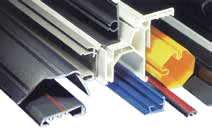
Manufacturing multi-hollow, asymmetrical, or co-extruded profiles demands advanced tooling and downstream integration. special-shaped profile extrusion equipment often involves co-extrusion, where two or more extruders feed different materials into a single complex die. This allows manufacturers to produce weatherstripping with a rigid PVC spine for structural mounting and a flexible thermoplastic elastomer (TPE) lip for sealing.
The complexity extends beyond the die. Secondary downstream operations must integrate seamlessly into the continuous line. Equipment setups frequently include in-line punching stations for mounting holes, taping applicators for double-sided adhesives, and embossing rollers for wood-grain textures. Inline laser micrometers provide real-time dimensional quality control, continuously scanning the profile and feeding data back to the control system to adjust haul-off speeds or vacuum pressure automatically.
Material Selection and Process Trade-Offs
Thermoplastics Suitability and Constraints
Every thermoplastic presents distinct processing constraints based on its molecular structure. Rigid PVC offers excellent weather resistance and structural rigidity, making it the dominant choice for window profiles, but its narrow processing temperature window demands twin-screw technology. High-Density Polyethylene (HDPE) provides exceptional chemical resistance and impact strength but exhibits high shrinkage rates during cooling, requiring extended vacuum calibration zones to maintain dimensional accuracy.
Amorphous polymers like Polycarbonate and ABS offer high dimensional stability and lower shrinkage rates compared to semi-crystalline polymers. Polycarbonate delivers extreme impact resistance and optical clarity, ideal for lighting profiles, but requires high processing temperatures and rigorous pre-drying. Understanding melt strength—the ability of the polymer to support its own weight as it exits the die—is critical. Materials with low melt strength require immediate, aggressive support from the calibration tooling to prevent sagging and distortion.
To handle these materials effectively, operators follow a strict sequence:
- Verify the resin's specific gravity and bulk density to calibrate the gravimetric feeders accurately.
- Set the desiccant dryer to the manufacturer's specified dew point and residence time.
- Establish the barrel temperature profile, typically stepping up the heat from the feed throat to the die zone.
- Purge the extruder with a high-viscosity compound to remove residual polymers from previous runs.
- Introduce the production resin and monitor the melt pressure transducer for stability before pulling the material through the calibration tank.
Balancing Speed, Tolerance, and Yield
Operators constantly navigate the inverse relationship between line speed and dimensional accuracy. Pushing a profile extrusion machine beyond its optimal output capacity introduces severe processing defects. High screw speeds increase mechanical shear, which overheats the polymer and causes degradation. Rapid extrusion rates also force the material through the die faster than the cooling system can extract the heat.
When the outer skin cools rapidly while the inner core remains hot, the profile develops high internal stresses. As the core eventually cools and shrinks, it pulls on the rigid outer skin, causing the entire profile to warp or bow. Prioritizing maximum line speed over thermodynamic limits inevitably leads to dimensional drift, failed quality inspections, and higher scrap rates. Maximizing yield requires finding the exact equilibrium where cooling capacity matches the mass output of the extruder.
| Common Defect | Primary Cause | Operational Solution |
| Melt Fracture (Sharkskin) | Excessive shear stress at the die exit; melt temperature too low. | Increase die temperature; reduce line speed; adjust land length. |
| Surging (Pulsing Output) | Inconsistent feeding; bridging in the hopper; worn screw flights. | Switch to gravimetric feeding; check hopper cooling jacket; inspect screw. |
| Warping / Bowing | Uneven cooling in the water bath; unbalanced flow in the die. | Adjust water flow on the hot side; modify die land lengths. |
| Black Specks | Degraded polymer flaking off from dead zones in the die or adapter. | Run purging compound; tear down and polish die channels. |
Implementation Risks and Operational Best Practices
Managing Die Swell and Dimensional Instability
Die swell occurs when the polymer melt expands radially as it exits the restrictive pressure of the die. Inside the die, the polymer molecules stretch and align in the direction of the flow. Upon exiting, these molecules attempt to recoil to their natural, relaxed state, causing the plastic to swell. This phenomenon makes it impossible to machine a die to the exact dimensions of the final product.
Tooling engineers mitigate die swell through iterative die modifications and precise draw-down ratios. The die is typically machined slightly larger or smaller than the target dimension, depending on the specific polymer's swell characteristics. The haul-off speed is then calibrated to pull the swollen melt down to the correct final size before it freezes in the calibration tank. Managing this requires strict control over melt temperature and pressure, as any fluctuation alters the severity of the swell.
Thermal Degradation and Contamination
Polymer burning and cross-contamination during material changeovers represent significant operational risks. Dead zones within the die or adapter flanges allow small amounts of polymer to stagnate. Over time, this stagnant material degrades, carbonizes, and breaks off, creating black specks in the finished profile.
Preventing degradation requires strict standard operating procedures. Operators must execute proper temperature step-down profiles before shutting down the machine to prevent baking the resin onto the screw. Utilizing specialized purging compounds during material or color changeovers effectively scrubs the barrel and screw flights. Preventative maintenance schedules must include regular teardowns of the die and filtration systems to polish flow channels and remove carbon buildup.
Continuous Quality Assurance
Relying solely on end-of-line manual inspections guarantees high scrap rates. Modern operations implement continuous quality assurance protocols directly into the production line. Closed-loop control systems utilize inline sensors to monitor melt pressure, melt temperature, and haul-off speed, making micro-adjustments to maintain equilibrium.
Vision inspection systems and multi-axis laser micrometers scan the profile continuously as it exits the cooling bath. These systems catch dimensional drift, surface defects, and color variations in real-time. By identifying deviations immediately, operators adjust vacuum pressure, water flow, or line speed before the process produces rejected batches of material.
Vetting a Profile Extrusion Machine Manufacturer
Selecting the right equipment partner dictates the long-term viability of the production line. When evaluating a profile extrusion machine manufacturer, buyers must look beyond the initial equipment specifications. Assess their in-house tooling capabilities; a manufacturer that designs, machines, and tests their own dies ensures better integration between the extruder and the tooling.
Demand rigorous Factory Acceptance Testing (FAT) protocols. The manufacturer should prove the equipment runs your specific material, at your required tolerances, for a sustained period before the machinery ever leaves their facility. Furthermore, evaluate their post-installation support infrastructure. A custom profile extrusion line requires ongoing technical support, software updates, and rapid availability of replacement parts like heater bands, thermocouples, and specialized screw elements to minimize unplanned downtime.
Conclusion
- Compile complete material data sheets, including rheological properties and shrinkage rates, for all intended polymers before contacting vendors.
- Finalize detailed CAD drawings of the profile cross-section, clearly marking critical tolerances and visible surfaces for the tooling engineers.
- Calculate target production volumes and line speeds to accurately size the extruder's output capacity and the required length of the cooling tanks.
- Establish a clear Factory Acceptance Testing protocol with your machinery partner to verify dimensional accuracy before finalizing equipment purchases.
FAQ
Q: What is the difference between profile extrusion and standard pipe extrusion?
A: While both are continuous processes, profile extrusion deals with non-tubular, often asymmetrical cross-sections requiring more complex die designs and specialized vacuum calibration. Pipe extrusion focuses on symmetrical, cylindrical shapes that distribute internal flow pressure evenly, making tooling and cooling significantly more straightforward.
Q: How does plastic profile extrusion differ from metal extrusion?
A: Plastic extrusion relies on melting polymers via thermal heaters and mechanical shear to flow continuously through a die. Metal extrusion typically involves forcing heated, but entirely solid, metal billets under extreme hydraulic pressure to deform them into shape. Plastic is a continuous melt process; metal is a discrete billet deformation process.
Q: What materials can be processed on a custom profile extrusion line?
A: Common thermoplastics include rigid and flexible PVC, ABS, Polycarbonate, High-Density Polyethylene (HDPE), and Thermoplastic Elastomers (TPEs). The specific material choice dictates the required screw design, barrel metallurgy, and the length and type of downstream cooling setup.
Q: How does a PVC profile extrusion machine differ from standard extruders?
A: PVC is highly heat-sensitive and prone to thermal degradation. Machines processing rigid PVC require twin-screw configurations to provide positive displacement with lower shear rates. They also require specialized bimetallic metallurgy in the barrel and screw to prevent the release of corrosive gases from degrading the equipment.
Q: What causes warping in the profile extrusion process?
A: Warping typically results from uneven cooling, improper haul-off speeds, or residual internal stresses caused by poorly balanced flow within the die. If thick and thin sections cool at different rates, the varying shrinkage pulls the profile out of alignment, causing it to bow or twist.
Q: How do I choose the right special-shaped profile extrusion equipment?
A: Focus on evaluating a manufacturer's direct experience with your specific polymer and profile geometry. Prioritize partners with the ability to design and test custom dies in-house, strong Factory Acceptance Testing protocols, and a proven track record of integrating complex downstream automation like inline punching and laser inspection.


