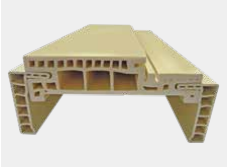
The building materials sector is experiencing a distinct shift in demand from traditional rigid PVC and natural wood to Wood-Plastic Composite (WPC) door frames. This shift is driven by requirements for higher structural durability, water resistance, and eco-friendly certifications, bridging the gap between plastic's longevity and wood's mechanical strength. Manufacturers looking to capture this premium market share often underestimate the mechanical and thermodynamic differences between processing pure plastics and wood-fiber composites. Attempting to run WPC through standard PVC machinery frequently results in premature equipment wear, surging, inconsistent density, and high scrap rates. Transitioning production requires a rigorous technical evaluation of extrusion capabilities. This guide breaks down the specific mechanical upgrades, tooling adjustments, and processing parameters required when investing in or upgrading to a dedicated WPC door frame extrusion line.
Torque and Power Demands: WPC processing requires significantly higher gearbox torque and motor capacity compared to standard PVC due to the high viscosity of wood-plastic melts.
Metallurgical Wear: The abrasive nature of wood fibers necessitates specialized bimetallic treatments for screws and barrels to prevent rapid degradation.
Moisture & Pest Management: Unlike pure PVC, WPC extrusion requires aggressive vacuum degassing to prevent structural foaming, as well as precise additive dosing to mitigate mild vulnerabilities to termites and fungal decay.
Cooling and Calibration: WPC profiles possess higher mass and retain heat longer, requiring extended vacuum calibration tables and optimized cooling water flow compared to standard PVC lines.
Market Context: Defining the End-Product to Determine Machinery Needs
Aligning machinery investment with target market demands dictates the success of your production facility. You must understand the exact physical properties of the end product before configuring the extrusion line. The construction industry demands specific performance metrics from door frames. Installers require materials they can cut, drill, and screw into without splitting. End-users demand weather resistance and longevity.
PVC Door Frames (UPVC) are lightweight, highly water-resistant, and composed entirely of plastic. This synthetic makeup renders them inherently termite-free. Producing UPVC frames demands high-speed, efficient extrusion. The primary focus remains on volumetric output and dimensional stability. However, pure PVC lacks heavy load-bearing strength. It cannot support heavy solid wood doors without internal steel reinforcements. Installers often struggle when mounting heavy hinges directly into hollow PVC profiles. The material tends to strip under heavy torque.
WPC Door Frames are significantly heavier. They offer superior structural integrity and excellent screw-holding capacity for hinges and heavy hardware. This mimics traditional solid wood perfectly. Carpenters can route, nail, and saw WPC frames using standard woodworking tools. While highly water-resistant, the natural wood content introduces mild vulnerabilities. Without proper chemical formulation, WPC remains susceptible to termite attacks. Producing WPC requires heavy-duty extrusion equipment. Operators must focus on melt homogeneity, precise density control, and flawless surface finish.
The manufacturing implication is profound. Choosing between these materials dictates the fundamental architecture of the extrusion line. Every component changes. You must re-evaluate everything from the formulation feeders to the haul-off unit. A standard PVC door frame extrusion line will fail under the mechanical stress of WPC composites. The gearboxes will overheat, and the screws will wear out prematurely.
Core Differences in Material Behavior During Extrusion
Understanding the thermodynamic and rheological differences between pure PVC and WPC drives every mechanical modification on the extrusion line. You cannot treat wood powder as a simple filler. It fundamentally alters polymer physics.
Adding 30% to 60% wood powder drastically reduces the Melt Flow Index (MFI). The resulting composite creates a highly viscous melt. This stiff material resists flow through the barrel and die head. It exponentially increases backpressure against the extruder thrust bearings. The friction generates massive internal shear heat. Operators must carefully balance external barrel heating against internal shear heating. If shear heat runs out of control, the material degrades instantly.
Wood fibers degrade rapidly at temperatures exceeding 200°C. Once burned, the fibers lose structural integrity and discolor the final profile. Pure PVC offers a more forgiving thermal degradation profile. WPC processing demands a much narrower processing window. Operators must control barrel temperatures with absolute precision to prevent scorching. Even a minor temperature spike in a single barrel zone can ruin an entire production run. The wood flour acts as an insulator, making it difficult to extract excess heat from the center of the melt stream.
Wood fiber hygroscopy presents a massive processing challenge. Even properly pre-dried wood powder introduces residual moisture. Under immense extrusion pressure, this moisture instantly turns to steam. Without specialized venting, the steam creates internal voids. These microscopic bubbles compromise the structural strength of the door frame. Effective moisture extraction is non-negotiable. If steam reaches the die head, it expands rapidly upon exiting the tooling. This causes melt fracture, surface pitting, and severe dimensional instability.
Technical Upgrades: Architecting a WPC Door Frame Extrusion Line
Transitioning from pure plastic to wood composites requires specialized machinery. You cannot simply pour WPC resin into a standard extruder. The mechanical demands require heavy-duty engineering solutions.
Screw and Barrel Geometry
A standard PVC twin-screw design will destroy wood fibers. Pure PVC screws utilize high compression ratios to generate shear heat for melting. WPC requires the exact opposite approach. You need a dedicated WPC plastic profile machine equipped with low-compression screws. Lower compression prevents excessive shear heat that burns the sensitive wood particles. The screw flights must feature deeper channels in the melting zone. This accommodates the bulky nature of the wood-plastic blend.
Furthermore, wood powder acts like sandpaper inside the barrel. The abrasive wear destroys standard nitrided steel rapidly. You must specify bimetallic alloy coatings for both the screws and the barrel. Tungsten carbide treatments provide the necessary hardness to withstand continuous abrasion. Manufacturers apply these coatings using Plasma Transferred Arc (PTA) welding. This creates a metallurgical bond that extends the lifespan of the plasticizing unit significantly.
Gearbox and Motor Specifications
Processing WPC requires exceptionally high torque. The viscous melt resists forward movement, pushing back against the screws. If the gearbox is undersized, the machine will stall or surge. Surging leads to inconsistent profile density and massive scrap rates. The drive system must overcome the immense friction generated by the wood flour.
When evaluating equipment, scrutinize the thrust bearings. Standard bearings will shatter under WPC backpressure. You must specify heavy-duty tandem thrust bearings designed specifically for high-resistance extrusion. Select high-torque gearboxes capable of sustaining continuous heavy loads. The motor and gearbox combination must run continuously without overheating. This ensures stable, consistent output across long production runs. Implement dedicated oil cooling systems for the gearbox. High-viscosity synthetic gear oil must circulate through an external heat exchanger to maintain optimal lubrication temperatures and prevent gear tooth wear.
Advanced Degassing and Additive Dosing Systems
Moisture and volatile gases will ruin a WPC profile. Standard single-vent extruders cannot remove enough steam. The sheer volume of gas generated by heated wood fibers overwhelms basic venting systems.
You must utilize double-vacuum venting zones on the extruder barrel. These aggressive vacuum systems extract moisture and volatiles before the material reaches the die head. High-capacity liquid ring vacuum pumps provide the necessary suction. This guarantees a dense, solid, and void-free profile. Operators must clean the vacuum filters daily. Clogged filters reduce suction, allowing moisture to slip past the venting zones.
WPC requires precise chemical protection. You must blend anti-termite agents, fungicides, and UV stabilizers into the matrix. Volumetric feeders lack the necessary precision. Implement automated gravimetric dosing systems. These systems accurately weigh and blend additives, overcoming the natural vulnerabilities of the wood fibers. Gravimetric control ensures every meter of the door frame contains the exact chemical formulation required for long-term durability.
Evaluating a Dedicated PVC Door Frame Extrusion Line vs. WPC Systems
Comparing the downstream equipment reveals stark differences. The die head, calibration table, and cutting units require significant upgrades to handle the dense composite material.
Tooling and Die Head Variations
Flow channel design differs completely between the two materials. Pure PVC flows relatively easily through complex dies. WPC requires streamlined, low-resistance die channels. Any dead zones in the die will cause material stagnation. Stagnant WPC burns quickly, ruining the extrusion run. Tooling engineers must design the die with gradual compression angles. This minimizes shear stress as the material shapes into the final profile. Furthermore, engineers must account for die swell. WPC expands differently than pure PVC upon exiting the die lip. The tooling dimensions must compensate for this expansion to achieve the correct final profile geometry.
When configuring a custom door frame extrusion line, consider co-extrusion capabilities. This is a critical upgrade for WPC. Utilizing an ABA or A/B co-extrusion die allows you to apply a pure PVC or ASA outer capping layer. This thin outer shell completely encapsulates the WPC core. It seals the wood fibers from moisture, enhances weatherability, and completely neutralizes termite risks. Co-extrusion also allows manufacturers to use recycled materials in the core while maintaining a premium surface finish.
Calibration and Cooling Infrastructure
Cooling times differ drastically. WPC possesses a much higher mass and density than hollow PVC profiles. The wood composite retains heat significantly longer. It acts as a thermal battery, holding internal heat long after the surface feels cool.
Standard cooling tables cannot extract heat fast enough. A dedicated WPC door profile machine requires longer, heavy-duty stainless steel vacuum calibration tables. These tables often span 8 to 12 meters. Extended cooling prevents post-extrusion warping. It ensures the heavy door frame remains perfectly plumb and dimensionally stable for installation. The cooling water must flow turbulently through the calibration blocks. Turbulent flow extracts heat much faster than laminar flow. Chilled water systems are mandatory for high-speed WPC production.
Operators must monitor the vacuum pressure gauges on the calibration table constantly. If the vacuum drops, the profile will pull away from the sizing blocks, resulting in undersized dimensions. The water temperature entering the calibration table should remain strictly between 15°C and 20°C. Warmer water fails to set the profile skin quickly enough, while excessively cold water can cause thermal shock, leading to internal stress fractures in the WPC matrix.
Haul-off and Cutting Units
Traction requirements increase with product weight. WPC profiles are heavy and dense. Standard haul-off units will slip, causing surface scratches and dimensional variations. You need robust caterpillar haul-off units with high clamping force. The rubber pads must grip the profile firmly without crushing it. Servo-driven motors provide precise speed control, eliminating tension fluctuations.
The haul-off unit must also feature independent pressure controls for the upper and lower caterpillar tracks. This prevents the tracks from crushing the hollow sections of the door frame while maintaining enough grip to pull the heavy solid sections. Furthermore, the cutting saw must utilize a pneumatic clamping system that matches the profile's exact contour. If the clamp applies uneven pressure, the saw blade will bind, causing jagged cuts and potential damage to the cutting motor.
Cutting technology also requires an upgrade. Standard saws struggle with the dense wood-plastic matrix. They often chip the profile edges or burn the material due to excessive friction. Transition to heavy-duty, dust-collecting saw units. Equip these saws with premium carbide-tipped blades designed specifically for composites. The saw carriage must travel synchronously with the extrusion speed. This guarantees a perfectly square cut, which is essential for assembling tight door frame joints.
Component
Standard PVC Extrusion
WPC Extrusion Requirements
Screw Compression Ratio
High (Generates shear heat)
Low (Prevents fiber burning)
Metallurgy
Standard Nitrided Steel
Bimetallic / Tungsten Carbide
Gearbox Torque
Standard Capacity
Exceptionally High Capacity
Degassing System
Single Vacuum Vent
Double Vacuum Venting
Cooling Table Length
Standard (4-6 meters)
Extended (8-12 meters)
Haul-off Traction
Standard Clamping Force
High Clamping Force (Heavy Duty)
Raw Material Preparation and Mixing Protocols
Before the material even reaches the extruder, the preparation phase dictates the success of the entire run. WPC requires a highly controlled mixing environment.
Wood Powder Drying: Raw wood flour contains up to 8% moisture. You must dry this material in a dedicated rotary dryer until the moisture content drops below 1%. Failure to do so will overwhelm the extruder's vacuum system.
Hot Mixing Phase: Transfer the dried wood powder, PVC resin, and additives into a high-speed hot mixer. The friction generated by the mixing blades raises the temperature to approximately 115°C to 120°C. This heat activates the coupling agents, ensuring the plastic encapsulates the wood fibers effectively.
Cold Mixing Phase: Immediately discharge the hot blend into a cooling mixer. The material must cool down to 40°C to 45°C before storage. If you skip this step, the residual heat will cause the compound to agglomerate and degrade in the storage silo.
Maturation Period: Allow the mixed compound to rest in a silo for 12 to 24 hours. This resting period allows the additives to stabilize and ensures uniform moisture distribution throughout the batch.
Regrind Utilization: If you plan to reuse scrap material, you must process it through a dedicated crusher and pulverizer. The regrind must be filtered through a vibrating screen to ensure uniform particle size before reintroducing it into the mixing phase at a maximum ratio of 15%.
Implementation Risks and Mitigation in Profile Extrusion
Running a PVC profile extrusion machine with WPC materials introduces severe operational risks. Proactive mitigation ensures consistent production and protects your capital investment. Ignoring these risks leads to catastrophic equipment failure.
Wood fibers act as an abrasive compound inside the extruder. This destroys standard screws rapidly. Partner with a reliable profile extrusion machine manufacturer. Demand verifiable metallurgical data for their screws and barrels. Implement strict preventative maintenance schedules. Inspect screw flights regularly for wear. Measure the clearance between the screw and the barrel wall. Excessive clearance reduces pumping efficiency and increases residence time, leading to material degradation.
High viscosity melts often cause extruder surging. This results in wavy profiles and inconsistent dimensions. Ensure accurate gravimetric dosing of all raw materials. Utilize advanced PLC (Programmable Logic Controller) systems. The PLC must perfectly synchronize the extruder RPM with the haul-off speed. This closed-loop control eliminates surging. Monitor melt pressure transducers continuously. Sudden spikes in melt pressure indicate a blocked die or degraded material.
Moisture and poor melt homogenization ruin the visual appeal of the door frame. Optimize the moisture content of the raw material mix. Keep moisture below 1% before it enters the hopper. Utilize high-speed hot mixers followed by cold cooling mixers to prepare the dry blend properly. Maintain strict temperature control across all die zones. Consider co-extrusion capping to guarantee a flawless, weather-resistant finish. A capped profile hides minor internal imperfections and provides a premium aesthetic.
Troubleshooting Common WPC Extrusion Defects
Even with top-tier equipment, operators will encounter processing challenges. Recognizing the symptoms early prevents massive scrap generation.
Tiger Stripes on the Surface: This visual defect usually indicates uneven melt flow or localized temperature fluctuations in the die head. Check the heater bands on the die and ensure the melt pressure remains stable.
Edge Tearing: If the edges of the door frame profile look ragged, the haul-off speed might be pulling faster than the extruder output. Alternatively, the die lip temperature might be too low, causing the material to drag.
Internal Voids: When you cut the profile and see bubbles inside the core, the vacuum degassing system is failing. Inspect the vacuum pump water levels, clean the barrel vent ports, and verify the raw material moisture content.
Profile Warping Post-Extrusion: If the frame bows after leaving the cutting saw, the cooling process is uneven. Adjust the water flow in the calibration table to ensure uniform cooling across all sides of the profile.
Die Build-up (Bearding): Material accumulating at the die exit indicates poor dispersion of lubricants or excessive melt temperature. Operators must clean the die lip immediately with brass tools to prevent the build-up from breaking off and embedding into the profile surface.
Conclusion
Audit your current factory floor space to ensure you can accommodate the extended 8-to-12-meter vacuum calibration tables required for WPC cooling.
Request verifiable metallurgical data and thrust bearing specifications from potential machinery suppliers before signing any procurement contracts.
Run a pilot test using your exact wood-plastic formulation on the manufacturer's test line to validate melt pressure stability and surface finish.
Upgrade your raw material handling systems to include high-capacity rotary dryers and gravimetric dosing units to strictly control moisture and additive ratios.
FAQ
Q: Can a standard PVC profile extrusion machine run WPC?
A: Technically possible for very low wood-fiber ratios, but highly discouraged. Standard PVC machines lack the necessary torque, wear resistance, and degassing capabilities. Attempting this leads to rapid equipment failure, surging, and poor product quality.
Q: What is the ideal screw design for a WPC door profile machine?
A: A conical or parallel twin-screw design with a low compression ratio is ideal. This geometry minimizes shear heat, preventing the wood fibers from burning. The screws must also feature bimetallic coatings to resist severe abrasive wear.
Q: Why does WPC require a longer cooling table than PVC?
A: WPC profiles have a significantly higher mass and density than standard hollow PVC profiles. The wood-plastic composite retains heat much longer. Extended vacuum calibration tables are necessary to extract this heat slowly, preventing post-extrusion warping.
Q: How do you prevent termite attacks on WPC door frames?
A: While WPC is highly water-resistant, the wood content introduces mild termite vulnerabilities. You must blend specific anti-termite agents and fungicides into the raw material mix using gravimetric feeders. Alternatively, apply a pure PVC or ASA co-extrusion capping layer to seal the core.
Q: What causes surface pitting and internal voids in WPC extrusion?
A: Moisture is the primary culprit. Wood fibers are highly hygroscopic. If the raw material contains excessive moisture, it turns to steam under extrusion pressure. You must pre-dry the materials and utilize double-vacuum venting on the barrel to extract volatile gases.
Q: Is co-extrusion necessary for WPC door frames?
A: It is not strictly mandatory, but it is highly recommended for premium markets. Co-extrusion applies a protective outer layer over the WPC core. This enhances weatherability, improves surface finish, and completely eliminates the risk of moisture ingress or pest damage.