The single screw extruder operates as the foundational workhorse of continuous polymer and plastics manufacturing, driving the vast majority of baseline extrusion processes globally. While the basic concept of a rotating screw inside a heated barrel appears straightforward, misunderstanding the thermodynamic realities of the melting process and screw geometry leads to suboptimal equipment specification, severe material degradation, and highly inefficient production rates. Operators frequently miscalculate the balance between mechanical shear and external heating, resulting in poor melt quality and surging at the die. This technical evaluation guide breaks down the precise mechanical and thermal operations of these systems. Understanding these core engineering principles is a strict prerequisite for accurately evaluating vendors, specifying custom designs, and mitigating operational risks on the factory floor.
- Mechanical vs. Thermal Energy: The majority of polymer melting in a single screw extruder is driven by mechanical shear (friction) generated by the rotating screw, not just the external barrel heaters.
- Zone-Specific Geometry: Extrusion efficiency relies on the precise calibration of the feed, transition, and metering zones to match specific polymer rheology.
- Application-Driven Design: Off-the-shelf screws often fail in specialized applications; achieving high-yield outputs requires custom screw profiles tailored to the end product.
- The Modern Paradigm: Modern single screw designs are rapidly evolving toward high-speed, high-efficiency, and highly specialized operations, pushing the physical boundaries of traditional output limits.
- Vendor Evaluation: Selecting equipment requires assessing not just the initial capital expenditure, but the supplier’s capability in metallurgical quality, custom engineering, and lifecycle service.
The Core Mechanics: The Working Principle of Single Screw Extrusion
The primary success criteria for any extrusion process are achieving a completely homogeneous melt at a consistent temperature and pressure without degrading the polymer chains. The system must continuously convert solid resin pellets into a uniform viscous fluid and pump it through a restrictive die at a highly stable rate. Variations in melt temperature or pressure directly translate to dimensional inaccuracies, gauge variations, and physical defects in the final extruded product.
To accurately understand the fluid mechanics inside the barrel, engineers utilize a foundational mental model known as the "flipped" kinematic model. Instead of visualizing a screw turning inside a stationary barrel, you flip the observation frame and imagine the barrel rotating around a completely stationary screw. This kinematic perspective drastically simplifies the calculation of shear rates, polymer film drag, and down-channel velocity profiles. By viewing the barrel as the moving component, you can clearly see how the friction between the solid polymer and the barrel wall physically drags the material forward down the screw channel. This relative motion generates the intense shear forces necessary for viscous dissipation, which acts as the primary source of heat for melting the polymer.
The standard extrusion screw is divided into three distinct functional zones, each engineered for a specific phase of the continuous process.
| Functional Zone | Channel Geometry | Primary Mechanical Function | Operational Risks |
| Feed Zone | Deep constant depth | Conveying solid pellets from the hopper into the heated barrel. | Premature melting causing bridging at the feed throat; poor conveying due to low barrel friction. |
| Transition (Melting) Zone | Gradually decreasing depth | Compressing the material, forcing air backward, and melting the polymer via shear friction. | Solid bed breakup leading to unmolten chunks entering the metering zone; severe pressure surging. |
| Metering Zone | Shallow constant depth | Homogenizing the melt, stabilizing the temperature profile, and building die pressure. | Excessive shear causing polymer degradation; insufficient pressure generation for the specific die. |
In the feed zone, conveying efficiency relies heavily on maintaining a high coefficient of friction at the barrel wall and a low coefficient of friction on the screw root. Operators must strictly control the feed throat cooling water to prevent the resin from sticking to the screw root, which immediately halts forward conveying.
The transition zone dictates the thermodynamic reality of melting. As the root diameter gradually increases, it compresses the material. A "solid bed" of unmolten pellets forms against the trailing flight, while a "melt pool" gathers at the leading flight. The polymer melts primarily at the barrel surface, is scraped off by the advancing flight, and accumulates in the growing melt pool. A critical failure mode here is solid bed breakup. If the solid bed fractures prematurely, unmolten chunks surge forward into the metering zone, leading to unmolten output and violent pressure fluctuations at the die head.
A widespread misconception on the factory floor is that the external heater bands provide the majority of the energy required to melt the plastic. In reality, the drive motor torque is converted directly into thermal energy via viscous dissipation within the polymer melt. The mechanical shear friction generated by the rotating screw against the highly viscous polymer provides up to 80% of the melting energy during steady-state operations. External heaters primarily bring the machine to operating temperature during initial startup and maintain the setpoint against ambient heat loss.
Key Components and System Architecture
Breaking down the physical architecture of the machine establishes clear, objective evaluation dimensions for procurement and heavy industrial maintenance.
Extruders require massive high-torque, low-speed power transmission. The drive motor and gearbox must deliver consistent rotational force to overcome the immense resistance of the viscous polymer melt. The thrust bearing assembly is arguably the most critical mechanical component in the entire drive train. It must absorb the massive backward axial force generated by pushing high-viscosity melt forward through a highly restrictive die. If you calculate the head pressure multiplied by the cross-sectional area of the screw, the resulting backward thrust is enormous. A failed thrust bearing leads to immediate and catastrophic gearbox destruction.
The metallurgical requirements for screws and barrels are exceptionally stringent. They must withstand extreme abrasive wear from filled polymers, high internal pressures, and corrosive off-gassing from materials like PVC or fluoropolymers. Bimetallic barrel linings, deep nitriding, and specialized alloy coatings are standard treatments for wear and corrosion resistance.
- Evaluate the depth and hardness of the nitrided layer. Standard gas nitriding should achieve a depth of at least 0.5mm to 0.8mm with a surface hardness exceeding 900 HV.
- Inspect the flight hard-facing techniques. High-wear applications require welded overlays like Colmonoy 56 or Stellite on the flight radii to prevent premature diameter loss.
- Verify the straightness and concentricity tolerances. A warped screw will rub against the barrel, causing immediate galling and catastrophic metal-to-metal wear.
- Assess the bimetallic barrel casting process. The centrifugal casting must ensure a uniform, porosity-free wear layer that bonds perfectly with the backing steel.
When evaluating a single screw and barrel supplier, assess their machining tolerances and material hardening processes. Tight clearances between the screw flight and the barrel wall are essential to prevent leakage flow over the flights, which drastically reduces pumping efficiency and increases residence time, leading to material degradation.
The extruder must interface seamlessly with specific die geometries to dictate the final product shape. Whether using flat dies for sheet casting or annular dies for pipe and blown film, the die head design must maintain the pressure and temperature uniformity established by the metering zone. Poor downstream integration causes flow imbalances, leading to warped, stressed, or out-of-spec products.
Application-Specific Configurations and Customization
Different manufacturing sectors require highly specific screw designs to achieve targeted production outcomes. Off-the-shelf, general-purpose geometries rarely deliver optimal performance across diverse polymer families.
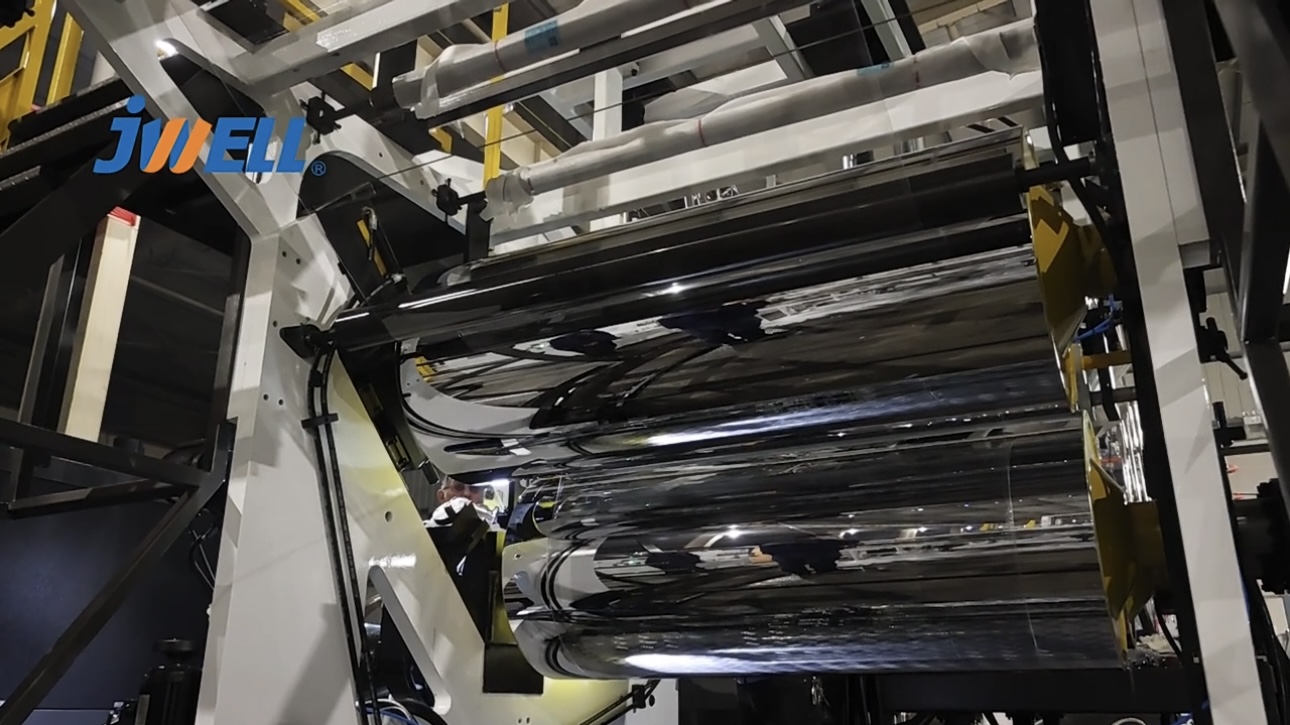
Producing flat webs demands extreme melt uniformity. A sheet and film extrusion screw focuses heavily on preventing gauge variations and optical defects like gels, unmelts, or flow lines. These screws frequently integrate barrier flights in the transition zone. A barrier flight physically separates the solid bed from the melt pool, absolutely preventing solid bed breakup and ensuring only fully molten polymer advances. Additionally, Maddock, pineapple, or spiral shear mixers are incorporated at the end of the metering zone for enhanced thermal and distributive homogenization right before the melt enters the flat die.
Applying insulating and protective layers on electrical wires and cables at high line speeds presents unique operational realities. The process requires the integration of cross-head dies and demands extreme high-pressure stability to ensure uniform, defect-free coating thickness around the fast-moving copper or aluminum conductor. Even minor surging in this application immediately causes bare spots, oversized diameters, or spark-test failures.
One-size-fits-all approaches severely compromise output and quality. A custom extrusion screw design optimizes the Length-to-Diameter (L/D) ratio and compression ratio based on the specific resin’s melt flow index (MFI), bulk density, shear sensitivity, and thermal stability.
| Polymer Type | Typical L/D Ratio | Compression Ratio | Screw Design Features |
| Rigid PVC | 20:1 to 24:1 | 1.5:1 to 2.0:1 | Deep flights, low shear, internal screw cooling to prevent degradation. |
| Fractional Melt HDPE | 30:1 to 33:1 | 3.0:1 to 4.0:1 | Barrier flights, intensive Maddock mixers, high shear generation. |
| PET (Dried) | 28:1 to 32:1 | 2.5:1 to 3.0:1 | Gradual transition, specialized mixing to handle low melt viscosity. |
Single Screw vs. Twin Screw Extruders: A Comparative Evaluation
Choosing between single and twin screw technologies requires a clear, unbiased framework based on operational trade-offs, mechanical complexity, and overall production value.
Twin screw extruders offer superior dispersive and distributive mixing. Their intermeshing screws are absolutely essential for compounding heavily filled materials, alloying distinct polymers, and incorporating high loadings of colorants or additives. However, single screw extruders are generally much more efficient and stable at building high, consistent pressure. This makes them the preferred choice for profile forming operations where die resistance is significant.
Single screws present significantly lower capital and maintenance costs. Twin screws involve highly complex gearboxes to drive two shafts in close proximity, higher wear rates due to intermeshing forces, and massive replacement costs for modular screw elements and segmented barrels.
Modern single screw machinery is developing rapidly toward higher screw speeds and specialized barrier designs. These advancements narrow the performance gap with twin screw extruders for specific applications, offering improved mixing and output rates without the added maintenance overhead of twin screw systems.
- Specify a single screw for processing virgin or pre-compounded materials where pressure stability is the primary requirement.
- Specify a single screw for standard profile extrusion, pipe manufacturing, and blown film operations.
- Specify a single screw for wire and cable coating where high line speeds demand consistent, surge-free melt delivery.
- Specify a single screw for sheet casting applications utilizing standard polyolefins or PET.
Evaluating Vendors and Mitigating Implementation Risks
Poor vendor selection carries massive implementation risks, including premature equipment wear, inconsistent output, and prolonged, expensive downtime.
A qualified single screw extruder manufacturer must demonstrate robust in-house engineering and rheological modeling capabilities. They should provide transparent metallurgical sourcing data for their barrels and screws, proving the origin and treatment of the steel. Furthermore, verifiable performance testing, such as rigorous Factory Acceptance Tests (FAT) using your specific production resins, is non-negotiable before authorizing equipment delivery.
Screw and barrel wear is inevitable due to continuous abrasion and corrosion. Partnering with a vendor that provides comprehensive plastic extrusion machine service is crucial for long-term profitability. This includes establishing predictive maintenance schedules, ensuring rapid replacement parts availability, and offering professional screw rebuilding or recoating services to extend the lifespan of your capital equipment.
Conclusion
- Audit your current extrusion lines immediately for signs of pressure surging, unmelts, or excessive motor load, documenting the exact operating parameters during these events.
- Compile a comprehensive list of your specific material formulations, including bulk density, melt flow index, and regrind percentages, to serve as the baseline for any equipment upgrades.
- Pull your existing screws during the next maintenance window and measure the flight outer diameters with micrometers to calculate exact wear rates and remaining lifespan.
- Consult with a specialized manufacturer to run a custom rheological simulation based on your documented materials to determine if a barrier flight or specialized mixer will increase your yield.
FAQ
Q: What is the standard L/D ratio for a single screw extruder?
A: A standard Length-to-Diameter (L/D) ratio typically ranges from 24:1 to 30:1. Specific applications dictate the exact ratio. Shorter ratios like 20:1 are used for shear-sensitive materials like PVC to minimize residence time. Longer ratios of 33:1 or more are required for high-output polyolefin processing and applications needing extensive mixing and melting capacity.
Q: How does a single screw extruder generate heat?
A: Heat is generated through a balance of mechanical shear friction and external barrel heaters. The rotating screw creates intense friction within the viscous polymer, converting the drive motor's torque directly into thermal energy via viscous dissipation. External heaters primarily provide initial startup heat and maintain the temperature profile against ambient losses.
Q: Can a single screw extruder be used for compounding?
A: It has severe limitations in compounding compared to twin screws, as it lacks the intensive dispersive mixing required for high additive loadings or breaking down agglomerates. However, incorporating specialized mixing sections like Maddock or spiral mixers acts as a partial mitigation for very light compounding or color blending tasks.
Q: What is "solid bed breakup" and how does it affect product quality?
A: Solid bed breakup occurs when the unmolten polymer bed in the transition zone fractures prematurely before fully melting. This allows unmolten solid chunks to enter the metering zone and pass through the die, resulting in severe surface defects, gels, and violent pressure surging.
Q: What causes surging in a single screw extruder?
A: Surging is typically caused by technical faults such as inconsistent feeding from the hopper, improper temperature profiles that cause bridging at the feed throat, solid bed breakup in the transition zone, or a fundamental mismatch between the screw geometry and the resin's specific rheology.
Q: How often should an extrusion screw and barrel be replaced?
A: Replacement timelines vary drastically based on processing materials. Processing highly abrasive glass-filled polymers may require replacement every 1 to 2 years. Processing clean, virgin polyolefins can allow components to last 5 to 10 years. Routine micrometer wear measurement practices are essential to determine exact replacement schedules.
Q: What is the compression ratio in extrusion?
A: The compression ratio is the ratio of the flight depth in the feed zone to the flight depth in the metering zone. It dictates exactly how much the polymer is compressed as it melts, which is critical for forcing out trapped air and ensuring uniform heat transfer into the melt pool.


