In today’s manufacturing landscape, sheet extrusion lines are pivotal in transforming raw polymer pellets into high-quality finished sheets used across industries like packaging, automotive, electronics, and construction. The design and optimization of these systems require a deep understanding of every stage in the process, from pellet handling to cooling and winding. In this article, we will break down the critical stages of sheet extrusion line design, providing insights into how these processes work together to ensure efficiency, product quality, and cost-effectiveness.
Introduction to Sheet Extrusion Lines
A sheet extrusion line is a highly specialized system used to manufacture polymer sheets from raw materials, typically plastic pellets. These pellets, made from various polymers such as polypropylene (PP), polyethylene (PE), or polyvinyl chloride (PVC), undergo a series of precise steps, including melting, shaping, cooling, and winding, to form sheets with consistent thickness and surface quality.
The entire process requires careful engineering to ensure that the materials behave optimally at each stage, which in turn impacts the final product quality, processing speed, and overall cost-effectiveness of production.
Stage 1: Material Feeding and Pellet Handling
The first stage in the sheet extrusion line design involves feeding the polymer pellets into the extruder. This process sounds simple but is crucial for the efficiency and consistency of the entire system.
Polymer Pellet Characteristics
Before discussing the feeding process, it's important to understand the characteristics of the polymer pellets used. They are typically uniform in size, dry, and free from contaminants. Any variation in pellet size or moisture content can lead to inconsistencies in the final sheet, which is why pellet handling is such an important factor in sheet extrusion line design.
Feeding Mechanism
The polymer pellets are fed into the extruder through a hopper, which is connected to a screw that helps convey the material. This mechanism must be carefully designed to ensure a consistent flow rate and prevent issues such as pellet bridging or blockages. Factors like the feed rate, pellet size distribution, and the hopper design directly influence the efficiency of the subsequent stages in the extrusion process.
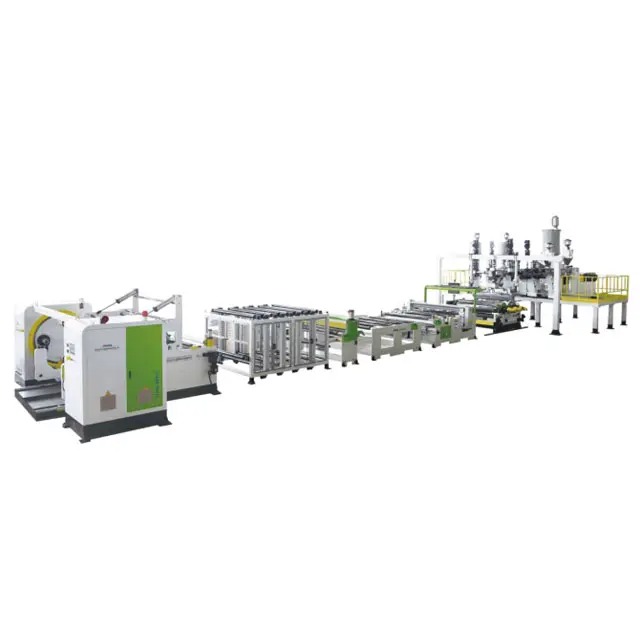
Stage 2: Melting and Plasticization in the Extruder
Once the pellets enter the extruder, they are subjected to high temperatures and shear forces, which melt and plasticize the material, preparing it for shaping into a sheet. The extruder’s design and operating conditions at this stage are critical for determining the material's viscosity and ensuring consistent flow throughout the extrusion process.
Twin-Screw vs. Single-Screw Extruder
There are two primary types of extruders used in sheet extrusion lines: twin-screw and single-screw extruders. The choice of extruder design depends on factors such as the type of polymer, desired output rate, and product specifications.
Twin-Screw Extruders: Offer better mixing and are more suitable for processing polymers with additives or high viscosities.
Single-Screw Extruders: Commonly used for basic polymers, they are easier to maintain and cost-effective for simpler applications.
The extruder’s screw configuration plays a pivotal role in ensuring optimal material melting and plasticization, which affects the quality of the final sheet. Proper temperature control and material residence time are essential for uniform melting and preventing degradation of the polymer.
Stage 3: Sheet Formation and Calendering
Once the polymer material is sufficiently melted, it is extruded through a die to form a continuous sheet. The sheet’s thickness and surface characteristics are determined at this stage, and the design of the die is crucial to achieving the desired shape and quality.
Die Design and Sizing
The die must be designed to ensure uniform distribution of the molten material across the entire width of the sheet. Variations in the die's geometry or temperature can result in thickness inconsistencies or surface defects, impacting the final product’s quality.
Calendering Process
After the polymer exits the die, the sheet is typically passed through a series of calender rolls, which apply pressure and heat to refine its thickness and smoothness. Calendering helps remove any residual stresses in the sheet and ensures uniformity.
The number of calender rolls and their operating conditions (speed, temperature, pressure) are carefully calibrated to ensure the material's uniformity, both in thickness and surface quality.
Stage 4: Cooling and Solidification
As the molten sheet moves through the extrusion die and calendering process, it is gradually cooled and solidified. Cooling is a critical stage in sheet extrusion line design as it ensures the sheet retains its shape and achieves the desired mechanical properties.
Cooling Techniques
Cooling can be achieved using several methods, including air cooling, water baths, or chilled rollers. Each method offers distinct advantages depending on the polymer type and desired sheet characteristics.
Air Cooling: Typically used for thinner sheets and materials that require minimal temperature control.
Water Bath Cooling: Provides more uniform and rapid cooling, often used for thicker sheets or those that require more precise dimensional control.
Chilled Rollers: These are often employed in high-speed lines to provide a more controlled and consistent cooling process.
The cooling rate impacts the crystallinity of the polymer, which in turn influences its strength, transparency, and overall mechanical properties. Engineers must carefully balance cooling times and methods to avoid warping or internal stresses in the sheet.
Stage 5: Winding and Cutting
Once the sheet has cooled and solidified, it is wound into rolls for further processing or shipment. The winding process must be meticulously designed to prevent wrinkles, stretching, or other defects that could affect the final product’s quality.
Winding Mechanism
A reliable winding system ensures that the sheet is wound evenly, maintaining consistent tension throughout the process. Tension control is essential to prevent issues like sheet stretching or uneven winding, which could lead to defects during later stages of processing.
Cutting and Length Control
In some cases, the continuous sheet needs to be cut into predetermined lengths before shipping or further processing. Accurate cutting mechanisms, combined with advanced length control systems, ensure that each sheet is cut precisely, maintaining consistent product dimensions.
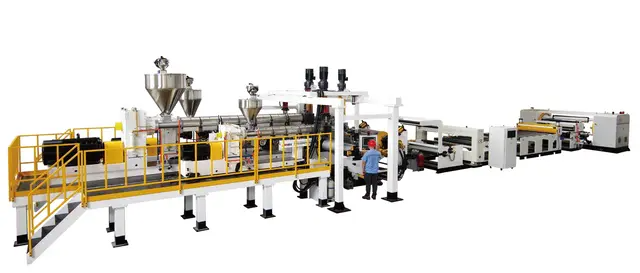
Stage 6: Quality Control and Testing
To ensure that the final product meets the required standards, quality control is a vital part of the sheet extrusion process. Throughout each stage of the line, several quality control measures are applied.
In-Line Quality Control
In-line sensors and monitoring systems can track the sheet's thickness, width, and surface quality in real-time, allowing operators to adjust the process as necessary. Optical scanners, for example, can detect surface defects, such as streaks or bubbles, which can be addressed before the sheet is sent downstream.
Mechanical and Chemical Testing
In addition to in-line monitoring, mechanical testing (such as tensile strength and impact resistance) and chemical testing (such as composition analysis) are essential for confirming the polymer sheet’s properties and ensuring it meets industry standards.
Conclusion
The design of a sheet extrusion line is a delicate balance between several interdependent factors, from material feeding and melting to cooling and winding. Each stage of the process must be carefully optimized to ensure high-quality polymer sheets are produced efficiently and cost-effectively. With the right design considerations, manufacturers can achieve optimal sheet properties while minimizing defects and waste.
By understanding and refining each step of the process, manufacturers can ensure that their sheet extrusion lines meet the ever-evolving demands of industries that rely on polymer sheets for various applications. Careful attention to detail and continuous innovation in extrusion technology will remain essential for maintaining competitiveness in the global market.
FAQ
1. What are the main components of a sheet extrusion line?
A typical sheet extrusion line includes a hopper, an extruder, a die, a cooling system, calender rolls, and a winding unit. The extruder is the heart of the system, where pellets are melted and formed into sheets. The cooling system ensures the sheet solidifies without defects, and the winding system rolls the finished sheet for further use.
2. How does the extrusion process affect the final sheet quality?
The extrusion process, including the melting, plasticizing, and cooling stages, significantly impacts the final sheet’s mechanical properties, such as strength, flexibility, and surface finish. Variations in temperature, pressure, and cooling methods can lead to inconsistencies in sheet thickness or defects on the surface.
3. What factors determine the choice of extruder for sheet production?
The choice between a twin-screw and a single-screw extruder depends on the material being processed, desired output speed, and the complexity of the polymer. Twin-screw extruders offer better mixing and are ideal for more complex formulations, while single-screw extruders are cost-effective and suitable for simpler polymers.
4. Why is cooling important in the sheet extrusion process?
Cooling helps solidify the molten polymer into a stable sheet. The cooling rate affects the polymer’s crystallinity, which in turn influences the sheet's strength, flexibility, and other mechanical properties. A well-controlled cooling process ensures that the sheet retains its dimensions and surface quality without warping or defects.
5. How can quality control be integrated into the extrusion line?
Quality control can be integrated through real-time monitoring systems, which check for deviations in sheet thickness, width, and surface defects. Mechanical and chemical testing can be performed on samples from each batch to ensure the sheet meets the required standards for its intended use.


