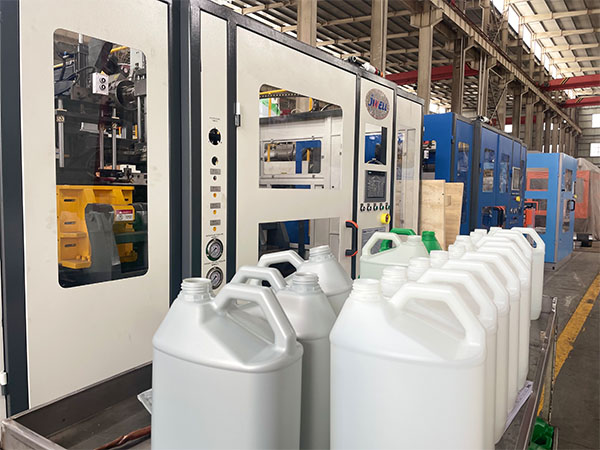
Is your production hardware driving profit or causing operational gridlock? Manufacturers often struggle to balance high output with rising energy costs. This guide explains why a Blow Molding Machine is the gold standard for jerrycan production. You will learn to identify the best setup for your specific scale.
Key Takeaways
● Extrusion Blow Molding Superiority: The Blow Molding Machine is the preferred choice over injection molding for jerrycans because it excels at creating hollow shapes with integrated handles.
● Material Versatility: Top-tier machines efficiently process HDPE and PP, ensuring containers are durable, chemical-resistant, and impact-resistant.
● Operational Efficiency: Advanced equipment can reduce energy consumption by up to 20% and maintain low scrap rates of approximately 30%.
● Customization Capabilities: Modern technology allows for specialized features like multi-layer construction and transparent view-strip lines for monitoring liquid levels.
● Production Scalability: Versatile machines accommodate a wide range of output requirements (40 to 200pcs/hr) and container sizes from 3L to 60L.
● Smart Automation: Utilizing PLC control systems and intelligent monitoring reduces labor costs, minimizes manual intervention, and stabilizes production quality.
The Definitive Answer: Why an Extrusion Blow Molding Machine is the "Best" Choice
When industry experts discuss the ideal equipment for liquid containers, the extrusion Blow Molding Machine consistently tops the list. It offers a unique combination of structural integrity and design flexibility that other methods simply cannot match for hollow plastic products.
Precision Engineering for HDPE and PP Materials
The best machines are designed to handle high-density polyethylene (HDPE) and polypropylene (PP) with ease. HDPE provides the necessary chemical and impact resistance for durable storage, while the machine’s precision screw design ensures these polymers are melted and extruded at exact temperatures to prevent degradation.
Superior Wall Thickness Control for Leak Resistance
A critical factor in jerrycan quality is uniform wall thickness. Top-tier equipment uses advanced parison programming to adjust the thickness of the plastic tube during extrusion. This ensures that corners and handles—areas typically prone to thinning—remain strong and leak-resistant.
Capability for Multi-Layer and View-Strip Personalization
Modern machines allow for complex configurations, such as adding a transparent "view strip" line so users can see the liquid level inside. They can also produce multi-layer containers, which use different materials in each layer to improve chemical barriers or reduce costs by using recycled plastic in the middle layer.
High-Speed Production Cycles (40 to 200pcs/hr)
Efficiency is measured by how many quality units you can produce per hour. High-performance models achieve outputs ranging from 40 to 200 pieces per hour, depending on the container size. This speed allows manufacturers to meet tight deadlines without compromising the cooling time required for structural stability.
Adaptability Across Sizes (3L to 60L Containers)
The "best" machine offers a wide working range. While some setups are specialized, many versatile blow molding units can be adjusted to produce containers as small as 3 liters for consumer use or as large as 60 liters for industrial and military applications.
Impact on Structural Integrity and Surface Smoothness
A high-quality molding process results in a smooth surface finish and high structural integrity. This is not just about aesthetics; a smooth surface reduces friction during cleaning and ensures that labels adhere correctly, which is vital for B2B branding and regulatory compliance.
Comparison: Why Blow Molding Outperforms Injection Molding for Hollow Containers
While injection molding is excellent for solid parts, blow molding is superior for hollow containers like jerrycans. It allows for much lower internal stresses and enables the creation of complex, enclosed shapes with integrated handles in a single step, which is difficult and expensive to achieve with injection techniques.
Key Performance Indicators (KPIs) of a High-Quality Blow Molding Machine
Evaluating a Blow Molding Machine requires looking at specific metrics that impact your daily bottom line. A machine that is cheap to buy but expensive to run will eventually drain your resources.
Energy-Saving Capabilities (Up to 20% Reduction)
Electricity is often the largest ongoing cost in plastic manufacturing. Leading machines now incorporate servo-motor systems and optimized heating elements that can reduce total energy consumption by up to 20% compared to older hydraulic models.
Rapid Color Change Systems to Minimize Downtime
In a flexible manufacturing environment, you may need to switch colors frequently. High-quality extruders are designed with "no-dead-corner" heads that allow for short color change times, often between 1 to 2 hours, significantly reducing wasted material and time.
Low Scrap Rates and Regrind Compatibility
Efficiency is also about what you don't throw away. Top machines maintain a scrap rate as low as 30%, and they are designed to process "regrind"—the excess plastic from handles and necks—back into the production cycle without losing quality.
Advanced PLC Control Systems for Automation
The best equipment uses Programmable Logic Controllers (PLC) to manage everything from temperature to movement. These systems allow for remote monitoring and "smart" adjustments, ensuring that every jerrycan produced is identical to the last.
KPI Metric | Target Performance Level | Business Benefit |
Energy Efficiency | 20% savings vs. standard | Lower utility bills |
Scrap Rate | ≤ 30% | Reduced material waste |
Color Change Time | 1 - 2 hours | Higher machine uptime |
Output Range | 40 - 200 pcs/hr | Meets diverse market demand |
Comparing Jerry Can Materials: How Machine Choice Influences Quality
The machine must be optimized for the specific resin you intend to use. Different plastics behave differently under heat and pressure.
● Optimizing for HDPE: High-density polyethylene requires specific screw geometries to ensure proper homogenization. The machine must provide enough torque to process this dense material while maintaining stable pressure.
● Processing PP: Polypropylene is lighter and more heat-resistant but has different shrinkage rates. The cooling system in your Blow Molding Machine must be precise to prevent the jerrycan from warping as it exits the mold.
● Incorporating Additives: Whether it is UV protection for outdoor storage or pigments for branding, the machine’s mixing system must distribute these additives evenly to avoid weak spots in the plastic.
Technical Design: The Role of Mold Engineering in Manufacturing Excellence
A world-class Blow Molding Machine is only half of the equation; the mold itself determines the final product's precision.
● CAD/CAM Integration: Modern mold design uses computer-aided design and manufacturing to ensure that every millimeter of the jerrycan is optimized for strength.
● Automated Mold Replacement: To reduce labor costs and downtime, high-end machines feature quick-change systems. They allow operators to switch between a 5L and a 20L mold in a fraction of the traditional time.
● Precision Cooling Channels: The faster you can cool the plastic, the faster you can start the next cycle. Advanced molds feature internal water channels that pull heat away from the plastic evenly, preventing "hot spots" that cause structural failure.
Evaluating Production Scale: From Portable 5L to Industrial 60L Needs
Your choice of equipment should align with your target market. A machine designed for small bottles will not handle industrial fuel drums efficiently.
● 5L and 10L Consumer Cans: These are widely used for detergents or emergency vehicle fuel. They require high-speed machines with multiple cavities to keep the cost per unit low.
● 20L to 60L Industrial Cans: These larger containers are used in maritime, military, and industrial sectors. They require "heavy-duty" blow molding machines with large platens and massive clamping forces to hold the heavy mold together.
● Floor Space Efficiency: B2B managers must consider the machine's footprint. A "best" machine maximizes output per square meter of factory space, often by integrating secondary processes like de-flashing (removing excess plastic) directly into the machine.
Maximizing ROI: Calculating the Value of Your Blow Molding Machine
Investing in a Blow Molding Machine is a significant capital expenditure. Calculating the Return on Investment (ROI) involves more than just the purchase price.
● Factors for ROI: You must analyze the total investment cost against the annual net profit generated by the output. This includes subtracting costs for labor, electricity, and raw materials.
● Reducing Labor Costs: Automated feeding systems and intelligent equipment monitoring reduce the number of operators needed per shift.
● Remote Operation: Advanced machines allow for remote technical support. If a problem occurs, experts can often diagnose it via the cloud, saving you the cost and delay of a physical technician visit.
Conclusion
The best Blow Molding Machine balances energy efficiency with high automation and material adaptability. High-quality equipment ensures uniform wall thickness and structural integrity for containers from 3L to 60L. Choosing jwellmech allows you to minimize waste while meeting strict safety standards. Their advanced solutions provide a fast return on investment through superior performance and reliable after-sales support. Contact an expert today to find the perfect configuration for your facility.
FAQS
Q: Why is a Blow Molding Machine best for jerrycans?
A: It offers superior wall thickness control and structural integrity for hollow containers.
Q: What sizes can a Blow Molding Machine produce?
A: High-quality machines are adaptable, molding sizes ranging from 3L to 60L containers.
Q: How does this machine improve cost efficiency?
A: Modern designs save 20% on energy and keep scrap rates near 30%.
Q: Plastic vs. metal: which is better?
A: Plastic is lightweight and corrosion-resistant, while metal offers higher durability.


