When it comes to high-speed fiber production, selecting the right spinning system is crucial. The decision between PET (Polyethylene Terephthalate) and PA6 (Polyamide 6) spinning lines can significantly impact the performance and cost-efficiency of the final product. Both materials are widely used in fiber production, but they offer distinct advantages and challenges in the spinning process. This article explores the key differences between PET and PA6 spinning lines, their advantages, and how to determine the ideal system for high-speed fiber manufacturing.
Understanding the Core Differences: PET vs. PA6
Before diving into which spinning system is best for high-speed fiber production, it's essential to understand the basic differences between PET and PA6.
PET: The All-Rounder in Fiber Production
Polyethylene Terephthalate (PET) is a versatile, cost-effective material widely used in textile and industrial fiber applications. It is known for its durability, chemical resistance, and excellent dimensional stability, making it a popular choice for a wide range of fibers. PET fibers also offer good mechanical properties, including strength and elasticity, which are essential for high-speed spinning processes.
PA6: The Performance Fiber
Polyamide 6 (PA6), also known as nylon 6, is a synthetic polymer prized for its superior strength, abrasion resistance, and flexibility. It’s commonly used for high-performance applications where the demand for toughness and resilience is high. PA6’s ability to withstand higher temperatures and its excellent dyeing properties make it a preferred material for more specialized fiber applications.
In the context of spinning lines, these differences translate into different processing requirements, machine setups, and operational efficiencies.
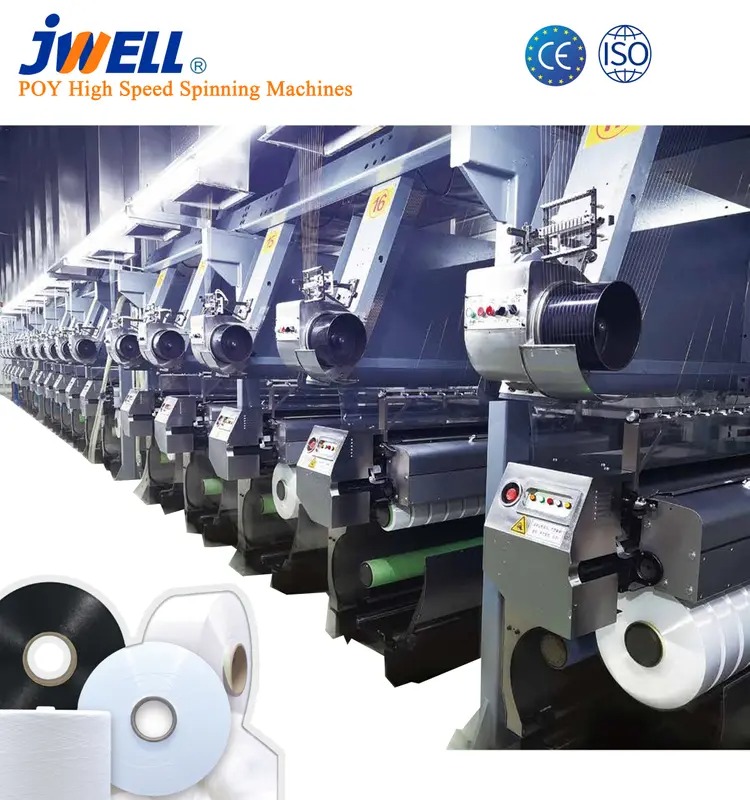
Key Considerations for High-Speed Fiber Spinning
Selecting the right spinning line for high-speed fiber production requires considering several factors that affect both the spinning process and the final product’s quality. These include material characteristics, machine setup, and production speed.
Spinning Speed and Process Efficiency
One of the defining features of high-speed spinning is the ability to maintain high throughput while ensuring fiber quality. PET fibers tend to perform well at high speeds due to their stable thermal properties, which reduce the risk of breakage or imperfections during spinning.
On the other hand, PA6 fibers, while offering better strength, may require slower spinning speeds to avoid issues like excessive friction or heat buildup. This makes PET spinning lines more suitable for applications where high speed is the primary objective, such as mass production or standard textile manufacturing.
Energy Efficiency and Cost Considerations
Both PET and PA6 materials require different energy inputs during the spinning process. PET tends to have a lower processing temperature, which makes the spinning process less energy-intensive. This contributes to lower operational costs for PET spinning lines. In contrast, PA6 requires higher temperatures and more energy for melting, leading to slightly higher operational costs, particularly in high-speed applications.
When considering high-speed fiber production, it’s essential to factor in the long-term energy costs, as PET may provide a more cost-efficient solution when scale and speed are critical.
Wear and Tear: Material Impact on Equipment Longevity
High-speed spinning lines are subject to intense mechanical stress, and the materials being processed have a significant impact on the wear and tear of spinning equipment. PET, being less abrasive compared to PA6, is gentler on machinery, which results in reduced maintenance costs over time. On the other hand, PA6’s abrasive nature means more frequent maintenance, especially at high spinning speeds.
For manufacturers aiming to reduce downtime and maintenance costs, PET spinning lines may offer a more reliable and cost-effective solution in the long run.
Comparing Fiber Quality: PET vs. PA6 at High-Speed
Strength and Durability of the Final Product
When comparing PET and PA6 fibers, PA6 has a clear advantage in terms of strength and durability. PA6 fibers are generally tougher and more resistant to wear, making them ideal for heavy-duty applications such as industrial textiles, automotive parts, and high-performance fabrics.
However, PET fibers are still highly durable and exhibit good mechanical properties, making them suitable for everyday textile applications, including clothing and home textiles. The trade-off between strength and cost often plays a decisive role in choosing between the two materials for high-speed fiber production.
Surface Finish and Dyeing Properties

PA6 fibers generally offer superior dyeing properties, producing rich, vibrant colors with high consistency. This makes PA6 the preferred choice for high-end textiles where aesthetic qualities are paramount. PET fibers, while dyeable, may not achieve the same level of vibrancy and may require additional post-processing steps for color consistency.
At high spinning speeds, PA6 fibers tend to maintain a smoother surface finish, which can enhance the overall appearance and feel of the fabric.
Key Advantages of PET Spinning Lines for High-Speed Fiber
Higher Throughput and Reduced Production Time
PET spinning lines are well-known for their ability to handle high production volumes at accelerated speeds. The lower processing temperatures and easier fiber formation allow PET fibers to be spun faster, which translates into higher throughput in high-speed operations. This makes PET an excellent choice for manufacturers looking to maximize output while maintaining consistent fiber quality.
Lower Operational Costs
Given that PET spinning lines require less energy to melt and spin fibers, they can be more cost-efficient, particularly for large-scale production. Lower energy consumption and reduced maintenance requirements contribute to significant savings over time.
Easier Scaling for Mass Production
For manufacturers focusing on mass-market textiles, such as apparel, home furnishings, and nonwovens, PET offers scalability that is hard to beat. The flexibility of PET spinning lines enables rapid adjustments to accommodate varying production needs without compromising on quality.
Key Advantages of PA6 Spinning Lines for High-Speed Fiber
Superior Fiber Strength for Specialized Applications
Although PA6 spinning lines may not achieve the same speeds as PET, they offer significant advantages in terms of fiber strength and durability. For applications where these properties are critical, such as in the automotive industry or high-performance sportswear, PA6 is often the material of choice.
Better Performance in High-Temperature Environments
PA6 fibers have superior heat resistance compared to PET, making them ideal for applications that require fibers to perform in high-temperature conditions. This includes specialized textiles for industrial uses or high-performance garments like fire-resistant clothing.
More Consistent Dyeing and Aesthetic Quality
PA6 fibers generally exhibit better dyeing properties, which means more consistent and vibrant colors. This makes PA6 an attractive option for high-end fashion and design-oriented textiles that require a premium aesthetic finish.
How to Choose the Ideal System for High-Speed Fiber Production
When selecting the right spinning system, several factors should be taken into account to ensure the choice aligns with production goals.
Production Volume
For manufacturers aiming for high-volume, low-cost production, PET spinning lines offer clear advantages. Their ability to maintain high throughput at reduced energy costs makes them the optimal choice for mass-production operations.
Application Type
If the final product needs to meet specific performance requirements, such as high strength, resistance to abrasion, or the ability to withstand extreme temperatures, PA6 spinning lines might be the better option. For example, PA6 is often chosen for products used in automotive and industrial sectors where performance and durability are critical.
Maintenance and Long-Term Costs
When factoring in maintenance, energy efficiency, and long-term operational costs, PET spinning lines tend to be more cost-effective, especially in high-speed production environments. This makes them a strong choice for companies focused on maximizing operational efficiency and minimizing downtime.
Conclusion
Choosing between PET and PA6 spinning lines for high-speed fiber production ultimately depends on the specific requirements of your manufacturing process. PET spinning lines excel in mass production, cost efficiency, and speed, making them a great option for high-volume, low-cost applications. In contrast, PA6 spinning lines provide superior strength, heat resistance, and aesthetic quality, making them ideal for specialized, high-performance products.
By carefully considering factors such as throughput, application type, and maintenance costs, manufacturers can select the spinning system that aligns best with their production needs and long-term goals.
FAQ
1、What are the main differences between PET and PA6 fibers?
PET fibers are generally more cost-effective, durable, and suitable for high-speed production. PA6 fibers, on the other hand, offer superior strength, heat resistance, and better dyeing properties, making them ideal for specialized applications.
2、Which spinning line is better for high-speed production?
PET spinning lines are typically better suited for high-speed fiber production due to their lower processing temperatures, faster fiber formation, and lower energy consumption.
3、Is PA6 suitable for high-speed fiber production?
While PA6 fibers offer superior strength and durability, they require slower spinning speeds to avoid issues with friction and heat. As a result, PET spinning lines are generally preferred for high-speed production, but PA6 can be used for specialized, high-performance fibers.
4、Which material is more cost-effective for large-scale production?
PET is generally more cost-effective for large-scale production due to its lower energy requirements and reduced wear on machinery, leading to lower operational costs over time.


