Application Advantages of Tapered Twin-Screw Extruders for PVC Products
One
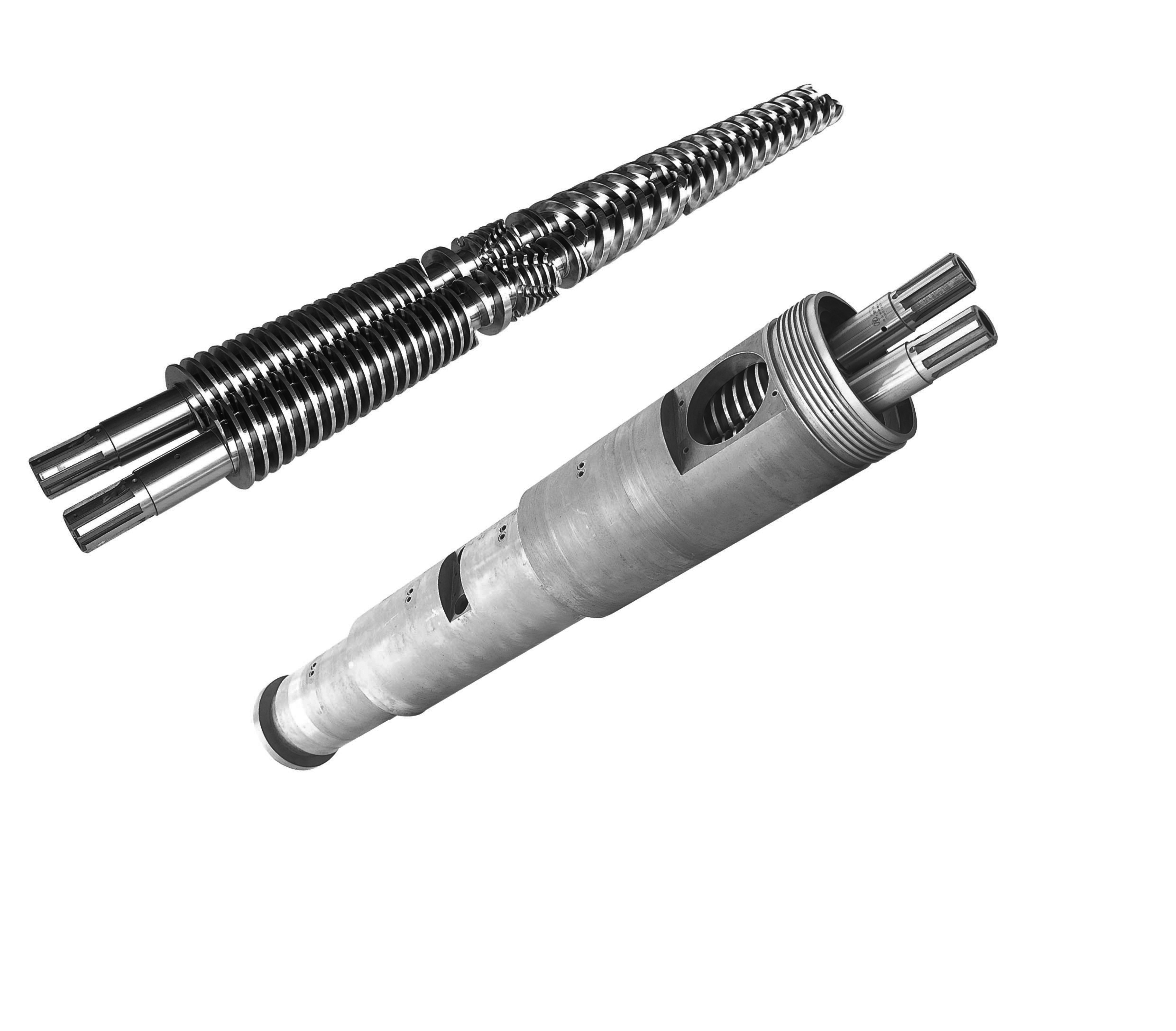
The Tapered twin-screw is a unique design in the field of twin-screw extrusion, characterized by both the screws and the barrel being conical in shape. Starting from the feeding section, the screw diameter gradually decreases, with the screw and barrel bore exhibiting a matching conical geometry. This design is particularly well-suited for the plasticization and molding of heat-sensitive plastics such as PVC. Consequently, it has become the primary method for manufacturing PVC plastic door and window profiles, pipes, foam boards, waterproofing membranes, and other products.
Two
Advantages of Tapered Twin Screws
Advantages of Suzhou Jwell's Tapered Twin-Screw Hydrodynamics and Solid Conveying Mechanisms:The larger diameter at its inlet enhances the feed opening's capacity, making it particularly adept at handling loose and poorly flowing materials like PVC powder, effectively resolving feed bottlenecks. During material conveyance, the natural reduction in screw groove volume progressively compresses the material. This process simultaneously achieves degassing, compaction, and preliminary plasticization without relying on complex additional components. Meanwhile, the gradual variation in screw groove depth ensures relatively gentle shear forces on the material, reducing the risk of thermal decomposition in heat-sensitive materials caused by friction-induced overheating. Additionally, the interaction between counter-rotating screws synergizes with the pressure generated by the conical structure, ensuring that materials achieve thorough mixing even during the conveying process.
At the level of mechanical design and system reliability, the smaller diameter at the end of the screw shaft represents a clever design feature. This means that when counteracting the same mold pressure, the transmission system experiences reduced backward thrust. This not only substantially reduces the load on the core thrust bearings, significantly extending the equipment's service life and reliability under continuous high-load production, but also enables the extruder to handle high-resistance production scenarios with greater ease, ensuring stable output processes.
Three
Application Industry
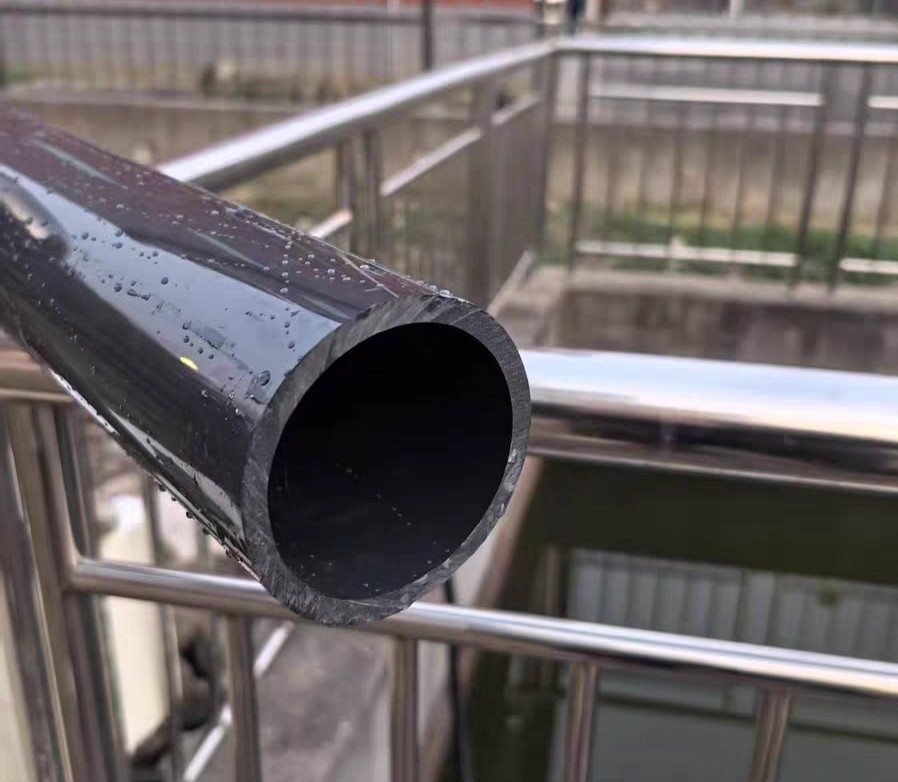
The core application of Tapered Twin-Screw extruders lies in the direct extrusion molding of polyvinyl chloride (PVC) products, which perfectly aligns with their unique design advantages. PVC processing typically adopts the "one-step" method, where powdered raw materials are directly formed. This process requires equipment with excellent powder conveying capability, gentle plasticization characteristics, and the mechanical strength to withstand high back pressure—requirements that Tapered Twin-Screw extruders are specifically optimized to meet. Their applications cover all major categories of PVC products: in pipes and fittings, they are primarily used for building water supply and drainage pipes (UPVC), wire and cable conduit sleeves, and various chemical pipelines; in profile extrusion, they serve as the standard production equipment for plastic door and window profiles, decorative panels, skirting boards, and stair handrails. For sheet production, they are not only used for rigid PVC sheets but also play a crucial role in controlling the decomposition of foaming agents in foamed sheets (such as free-foaming or skinned foamed sheets), thanks to their gentle shear field, which ensures uniform cell structure. Additionally, Tapered Twin-Screw extruders are widely used in the pelletizing of various PVC-specific compounds, such as cable materials, transparent materials, and highly filled modified materials.
In non-PVC applications, Tapered Twin-Screw extruders, leveraging their gentle processing characteristics, are also suitable for other material systems sensitive to shear and temperature. For example, when processing wood-plastic composites (WPC), they can reduce the risk of thermal degradation of wood fibers at high temperatures, maintaining good material color and performance. For engineering plastics with high melt viscosity and narrow processing windows, such as polyvinylidene fluoride (PVDF), their gradual temperature rise and stable conveying facilitate precise process control. Additionally, when handling highly filled formulations (such as PVC or polyolefins filled with high levels of calcium carbonate), the strong conveying capacity and low shear-induced heat generation of conical screws help ensure uniform filler dispersion and prevent resin matrix decomposition or performance degradation due to localized overheating. Although their market share in these fields is relatively small, Tapered Twin-Screw extruders provide a reliable technical solution for addressing specific thermal sensitivity and challenging processing issues.
Four
Advantages of Tapered Twin Screws in PVC Extrusion Applications
1 Direct processing of powdered materials lays the foundation for the “one-step method” process.
The most significant structural advantage of Tapered Twin-Screw extruders lies in the substantially larger diameter of the feeding section compared to the metering section, which provides an exceptionally wide cross-sectional area at the material inlet. This design enables the extruders to easily accommodate and efficiently convey low-bulk-density, poor-flowability PVC dry blends (including resin, stabilizers, lubricants, fillers, etc.). This advantage supports the economically efficient "one-step" processing route in PVC manufacturing, where the powdered mixture is directly fed into the extruder without pre-pelletization, completing conveying, plasticization, devolatilization, homogenization, and shaping in a single step. Compared to the traditional "two-step" method (pelletizing first, then extruding), this approach eliminates the energy consumption and equipment investment required for the pelletizing stage, significantly reducing overall production costs. This economic benefit is the core reason why Tapered Twin-Screw extruders dominate large-scale PVC production.
2 A gentle and controllable plasticization process ensures the safe processing of heat-sensitive materials.
As a typical heat-sensitive polymer, PVC has a relatively narrow processing window. It is prone to thermal decomposition under excessively high temperatures or intense shear, releasing hydrogen chloride gas and causing material discoloration and performance degradation. The flight depth of Tapered Twin-Screw extruders decreases linearly and gently from the large-diameter feeding section to the small-diameter metering section. This means that the variation in shear rate experienced by the material during its forward movement is relatively moderate. This gentle shear process effectively controls the internal heat generated by viscous dissipation and prevents the formation of localized hot spots, thereby providing a safe and controllable melting environment for PVC materials. This not only ensures the continuous stability of the production process but also fundamentally enhances the intrinsic quality of the final product, such as color uniformity, mechanical strength, and long-term durability.

3 High-efficiency internal venting and progressive compaction optimize melt quality.
During the conveying of material in the conical screw channel, the inevitable convergence of the channel volume subjects it to continuous and steady axial compression. This "geometric compression" effect serves two critical functions: First, it provides a smooth escape path for air and low-molecular volatiles entrained in the loose powder, which can be effectively removed through vent ports located in the compression section, thereby preventing defects such as bubbles or silver streaks in the final product. Second, this gradual compaction process promotes close bonding between powder particles and facilitates their stepwise melting accompanied by shear-induced heat generation. This is particularly beneficial for achieving uniform and dense plasticization of high-viscosity rigid PVC melt, laying a solid foundation for subsequent stable extrusion.
4 Robust axial thrust bearing design ensures reliable operation under high back pressure.
From a mechanical design perspective, the conical structure offers unique mechanical advantages. According to the axial force calculation formula, when the extruder head pressure (die resistance) remains constant, the axial reaction force acting on the thrust bearing is proportional to the cross-sectional area of the screw end journal. The significantly smaller journal diameter at the end of the conical screw means that under the same die pressure, the axial load it generates is far lower than that of a parallel twin-screw extruder of equivalent specifications. This design significantly reduces the load on the critical thrust bearing, not only extending its service life but also enhancing the reliability of the entire drive system under high-pressure conditions. This enables Tapered Twin-Screw extruders to effortlessly handle the high-resistance dies required for products such as PVC pipes and profiles, achieving long-term, uninterrupted, and stable high-volume production.
5 Excellent self-cleaning and base mixing capabilities meet production flexibility and homogenization requirements.
Tapered Twin-Screw extruders typically feature a counter-rotating and closely intermeshing design. During operation, the two screws function like intermeshing gears, with their flight surfaces and roots continuously scraping against each other. This mechanism endows the equipment with excellent inherent self-cleaning capabilities. It effectively prevents material from stagnating or carbonizing in the flight gaps or dead zones, which is particularly important for the production of items such as profiles that require frequent color or formula changes. This significantly reduces downtime for machine cleaning and minimizes material waste. Simultaneously, the shear, splitting, and recombining actions exerted on the material within the intermeshing zone provide sufficient distributive mixing effects. This ensures thorough macroscopic homogenization of all components in the PVC formulation (such as stabilizers, pigments, and fillers), meeting the quality requirements of most PVC products.
Five .In summary, due to its unique conical geometric design, the Tapered Twin-Screw extruder has become an irreplaceable core equipment for the extrusion molding of heat-sensitive plastics like PVC. Its core advantages lie in: exceptional direct processing capability for powders, perfectly supporting the economical and efficient "one-step" production process; gentle and controllable plasticization, effectively preventing thermal decomposition of PVC; natural venting and compaction functions, optimizing melt quality; robust axial load-bearing design, ensuring operational reliability under high backpressure; and excellent self-cleaning and fundamental mixing capabilities. These characteristics enable it to dominate large-scale building material sectors such as PVC pipes, profiles, sheets, and pelletizing, while also extending its application to challenging heat-sensitive materials like wood-plastic composites and fluoroplastics.